Warehouse 911
Emergency warehouse rescue and recovery
Orders are late. Backlog is climbing. Inventory cannot be trusted. Supervisors are exhausted, customers are escalating, and every team has a different view of what should be fixed first. This is no longer an ordinary improvement project. It is an operational emergency.
SplitLogiX brings structure to the crisis. We identify where the operation is failing, stabilize the workflows that are creating the greatest risk, and rebuild the operating model across Processes, People, and Technology.
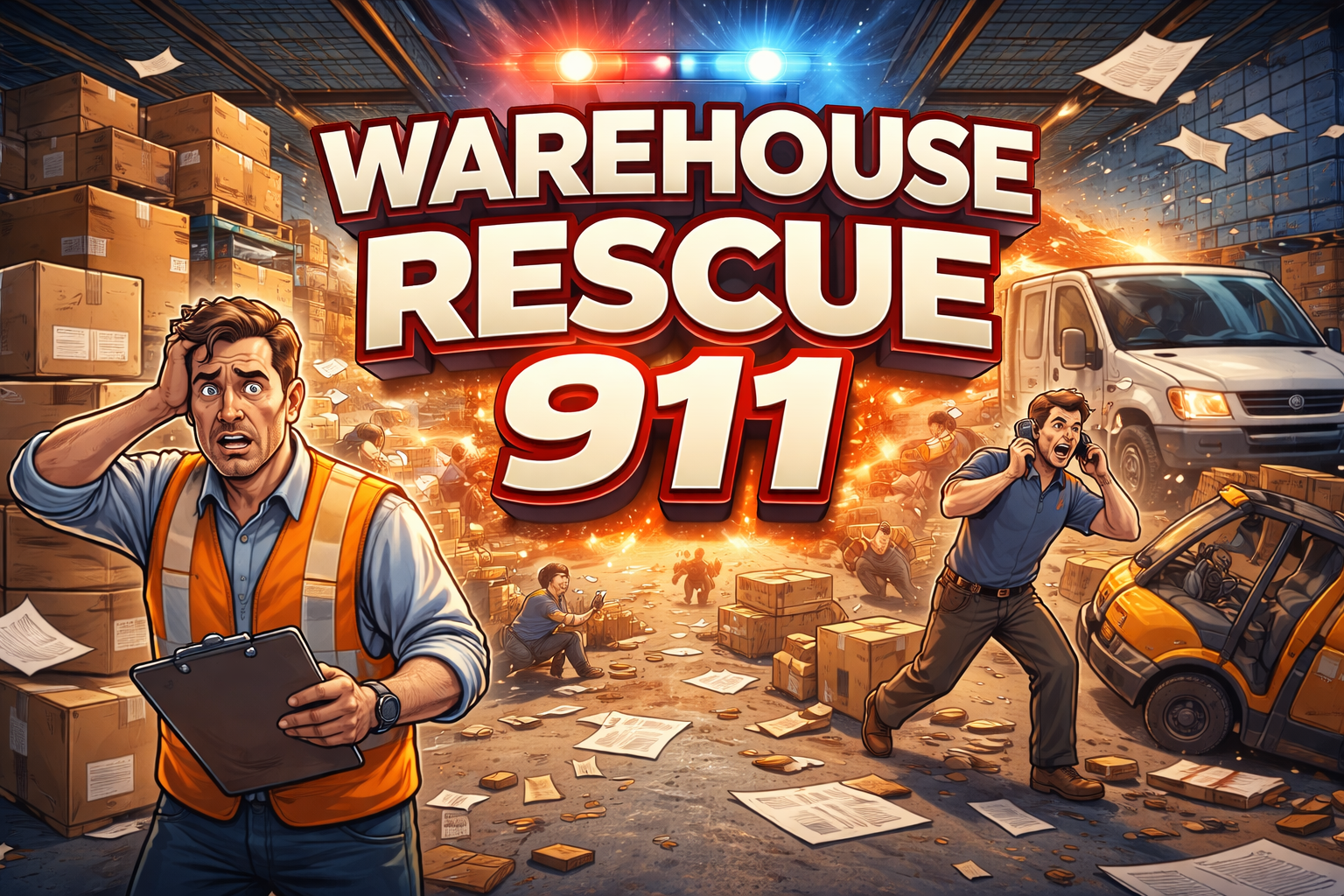
When an underperforming warehouse becomes an emergency
Most warehouse improvement work assumes the operation is stable enough to pause, analyze, design, and implement. A warehouse crisis does not give you that luxury. Trucks are waiting, customer orders are already late, inventory is moving without reliable control, and the team is spending every shift reacting to the last failure.
In an emergency room, the medical team does not begin with a long-term wellness plan. They establish control, check the patient's vital signs, and treat the problem that presents the greatest immediate threat. Warehouse 911 applies the same logic to a failing distribution operation.
Performance is not repaired. Performance is rebuilt.
Signs that your operation may need Warehouse 911
- On-time, in-full service is falling and customer escalations are increasing.
- Inbound, production-support, or outbound backlog keeps growing despite added labor or overtime.
- The WMS shows inventory that the team cannot find on the floor.
- Trailers, containers, or orders wait because no one has reliable visibility to status or priority.
- Supervisors spend each shift firefighting instead of managing a controlled operation.
- Different shifts use different workarounds, labels, status codes, or quality checks.
- A new WMS, automation solution, or site go-live is not performing as designed.
- Labor instability, absenteeism, turnover, or inconsistent training are weakening execution.
- The 3PL, client, corporate team, and site leadership are trapped in a blame cycle.
- Several leaders can describe the symptoms, but no one has clear authority to direct the recovery.
A site does not need to display every symptom before it is in crisis. The deciding question is whether the operation still has enough control to improve through normal project methods, or whether it needs an emergency operating model first.
The Warehouse 911 response
1
Triage is vital
Establish accountability and assess operational vitals. Triage stops the team from chasing symptoms and directs attention to the source of the risk.
2
Stop the bleeding
Immediate stabilization focusing on damage control. Temporary crisis controls restore visibility and discipline quickly.
3
Disciplined recovery
Move from survival to structure. Rebuild workflows across Processes, People, and Technology for sustainable performance.
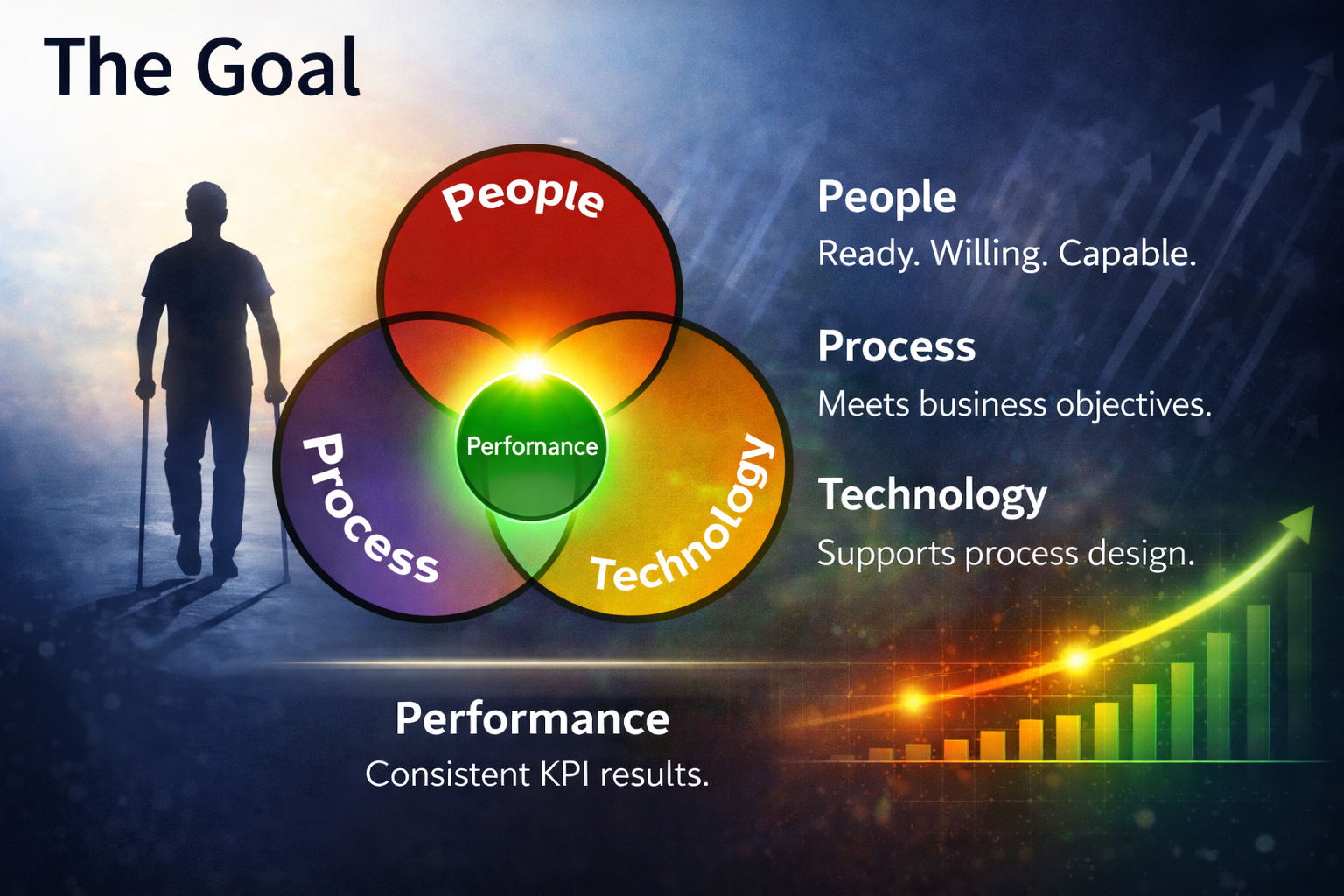
Performance is the output
Warehouse performance does not improve because a team is told to improve the KPI. On-time service, inventory accuracy, productivity, and customer confidence are outcomes. They improve when Processes, People, and Technology work together as one operating system.
Processes
How work should flow, including roles, decision points, business rules, handoffs, exceptions, and controls.
People
Clear ownership, practical training, leadership routines, change support, and enough on-floor guidance for the process to become real.
Technology
WMS and ERP behavior, configuration, transaction discipline, data visibility, devices, and integrations.
You cannot hold people accountable to a process that was never clearly defined, trained, or supported.
What SplitLogiX delivers during a rescue
- Rapid intake and crisis classification.
- A clear recovery command structure with decision authority.
- An assessment of the operational vitals.
- A prioritized stabilization plan.
- Temporary controls, tracking tools, and routines.
- Root-cause confirmation across Processes, People, and Technology.
- As-Is and To-Be process flows and system requirements.
- Work instructions with system detail and visuals.
- Role-based training, documented records, and coaching.
- Go-live support and transition monitoring.
Representative operational vitals
Why SplitLogiX
We work close to the floor
Our consultants understand the pressure of live operations and post-go-live instability.
We bridge ops and tech
We trace floor-level failures through process, system behavior, data, and training.
We use small, senior teams
Two to three experienced consultants move quickly without creating more complexity.
We document the model
Recovery is converted into process flows, instructions, and routines that remain.
We stay through adoption
Training and handholding are protected parts of the recovery process.
Platform-independent
Experience spanning Odoo, Microsoft Dynamics, Infor, Blue Yonder, and more.
Frequently Asked Questions
Is Warehouse 911 only for a site that is already failing?
No. The triage determines whether the operation is in crisis or is stable enough for a normal improvement project. The difference matters because the two situations require different methods.
Does a warehouse rescue require replacing the WMS?
Not necessarily. We assess the full operating model before recommending changes. A system may just be exposing unclear processes or configuration choices.
Can SplitLogiX work in a 3PL and client environment?
Yes. Warehouse 911 is designed for environments where multiple stakeholders may have valid concerns. We help establish one recovery structure and shared facts.
How quickly can SplitLogiX begin?
We start with a rapid intake to understand severity. Mobilization is then scoped around the urgency of your specific operation.
Regain control before the crisis gets more expensive
A warehouse crisis compounds quickly. The first step is to establish what is happening and where intervention will have the fastest effect.
United States and Canada: Adri McCaskill
Africa and Europe: Lani van Gerve
Tell us what is happening
Share the current condition of the site. A member of the SplitLogiX team will contact you to discuss the next step.